Chapter 17 Section 2 the Nothern Rensiassnace Guided Reading Answer
Affiliate 17 Section ii The Northern Renaissance
Renaissance Art in Northern Europe n n Should not exist considered an appendage to Italian art. Just, Italian influence was strong. n Painting in OIL, developed in Flanders, was widely adopted in Italia.
n The differences betwixt the ii cultures: n n due north Italy change was inspired by humanism with its accent on the revival of the values of classical antiquity. N. Europe modify was driven by religious reform, the return to Christian values, and the revolt against the authority of the Church. More princes & kings were patrons of artists.
Characteristics of Northern Renaissance Art n n north The continuation of tardily medieval attention to details. Tendency toward realism & naturalism [less emphasis on the "classical ideal"]. Interest in landscapes. More emphasis on heart-form and peasant life. Details of domestic interiors. Great skill in portraiture.
The Northern Renaissance Begins n north n By the tardily 1400 south, Renaissance ideas had spread to Northern Europe Especially: England, France, Germany, and Flanders (now office of France and the netherlands). End of Hundred Years War in 1453 sparks growth in Flanders
The Northern Renaissance Begins due north northward England French republic were unified nether potent monarchs Francis I of France invited Leonardo da Vinci to retire in French republic Fontainebleau castle became a showcase for Renaissance artists were especially interested in realism
The School of Fontainebleau It revolved around the artists at Francis I's Palace at Fontainebleau. , A group of artists that busy the Royal Palace between the 1530 south and the 1560 s. , It was an offshoot of the Mannerist School of Art begun in Italia at the finish of the Loftier Renaissance. , characterized by a refined elegance, with crowded figural compositions in which painting and elaborate stucco work were closely integrated. Their work incorporated allegory in accordance with the courtly liking for symbolism.
![The School of Fontainebleau , , Gallery [right] by Rosso Fiorentino & Francesco Primaticcio](https://slidetodoc.com/presentation_image/2145df256ebdd5aceeb2c42fc7d6639a/image-8.jpg "The School of Fontainebleau Gallery right by Rosso Fiorentino Francesco Primaticcio")
The School of Fontainebleau , , Gallery [right] by Rosso Fiorentino & Francesco Primaticcio 1528 -1537
Artistic Ideas Spread north north State of war in Italy resulted in artists moving to Northern Europe for safer lifestyle North. European artists who studied in Italia carried Renaissance ideas back to their homelands
German Painters northward 1494 -Albrecht Dürer studied in Italy n northward n woodcuts and engravings emphasis upon realism Hans Holbein the Younger northward n n portraits about photographic in detail Emigrated to England Painted portraits of King Henry VIII
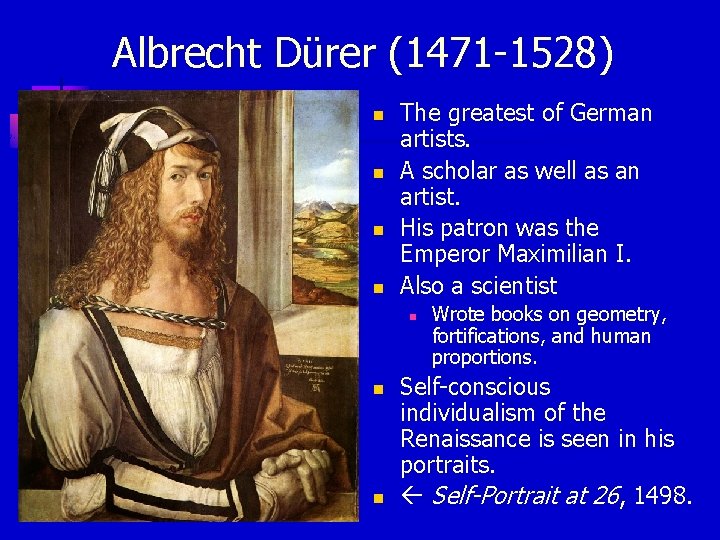
Albrecht Dürer (1471 -1528) n n The greatest of German artists. A scholar likewise as an artist. His patron was the Emperor Maximilian I. Also a scientist n n due north Wrote books on geometry, fortifications, and human being proportions. Cocky-conscious individualism of the Renaissance is seen in his portraits. Cocky-Portrait at 26, 1498.
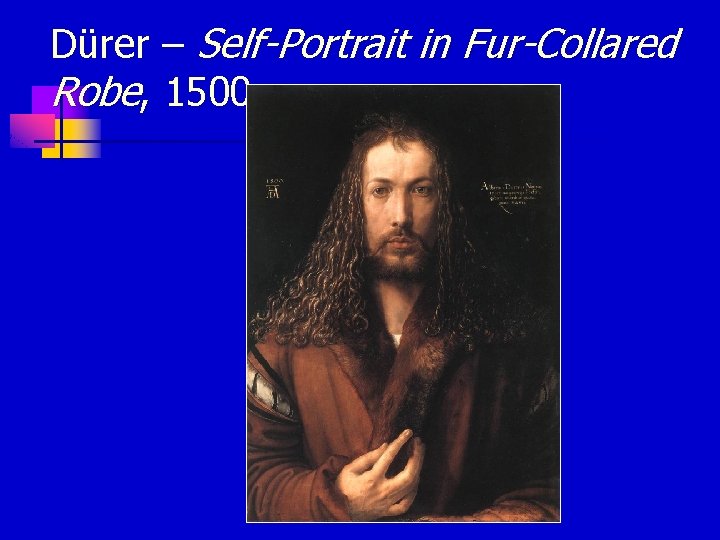
Dürer – Cocky-Portrait in Fur-Collared Robe, 1500
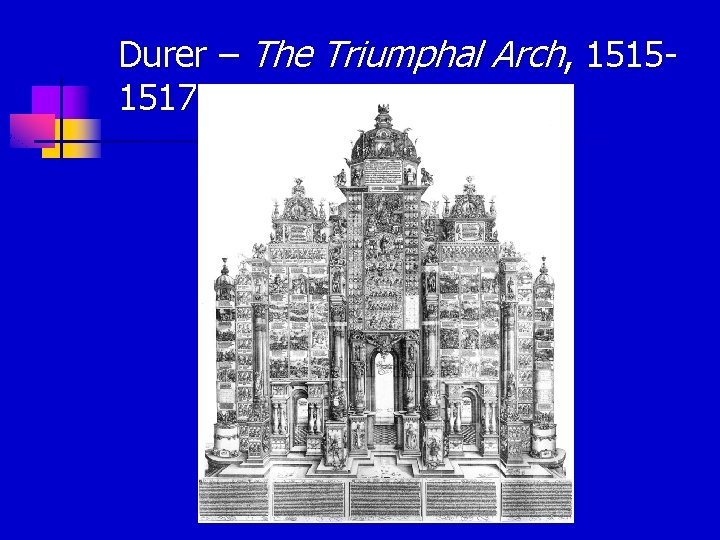
Durer – The Triumphal Arch, 15151517
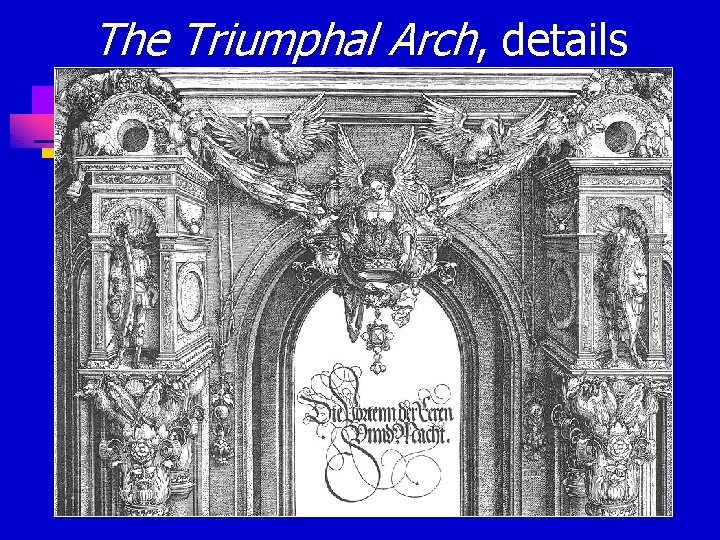
The Triumphal Arch, details
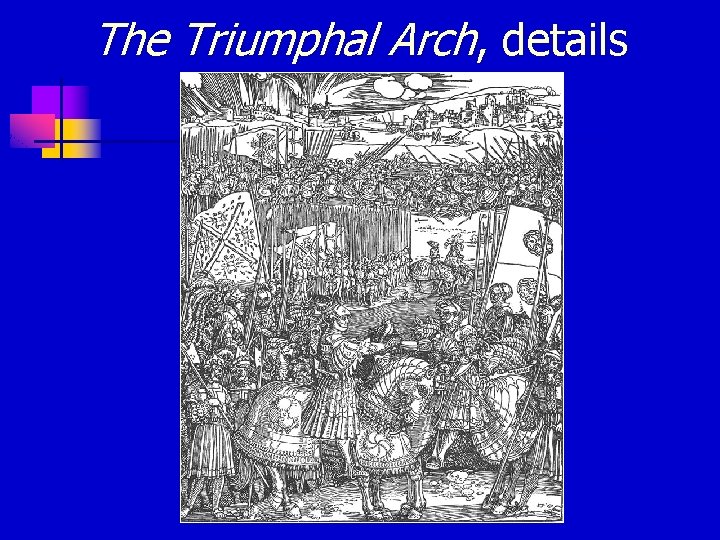
The Triumphal Curvation, details
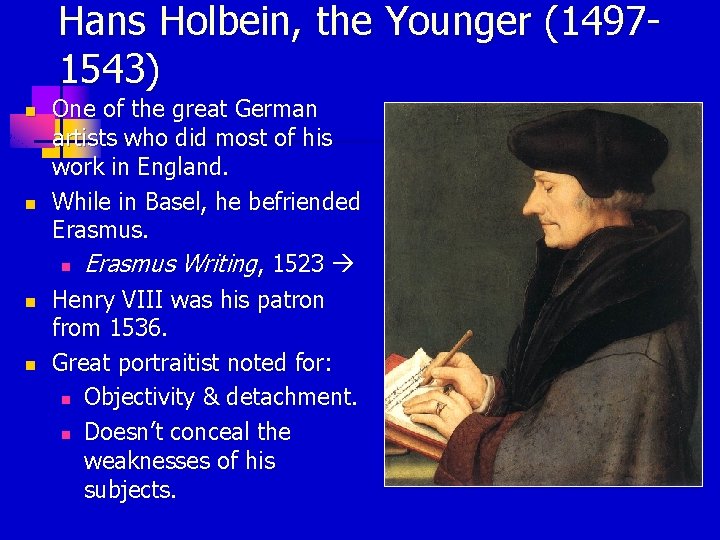
Hans Holbein, the Younger (14971543) n northward One of the great German artists who did almost of his work in England. While in Basel, he befriended Erasmus. due north Erasmus Writing, 1523 Henry VIII was his patron from 1536. Nifty portraitist noted for: n Objectivity & disengagement. n Doesn't conceal the weaknesses of his subjects.
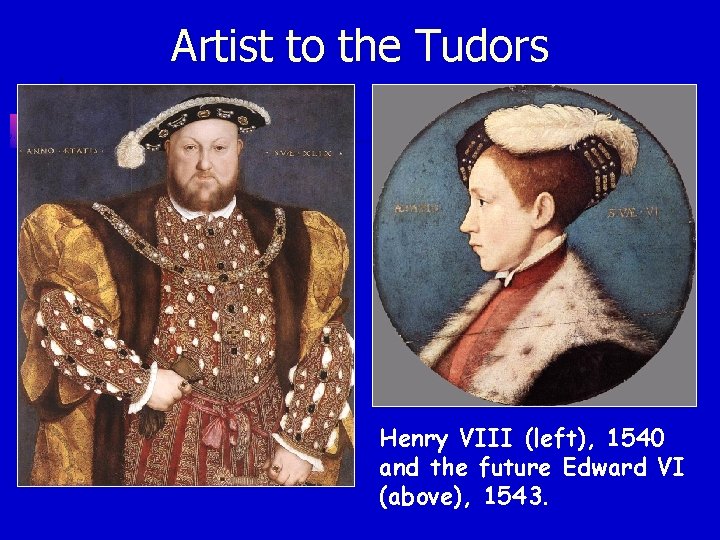
Creative person to the Tudors Henry 8 (left), 1540 and the future Edward Half-dozen (above), 1543.
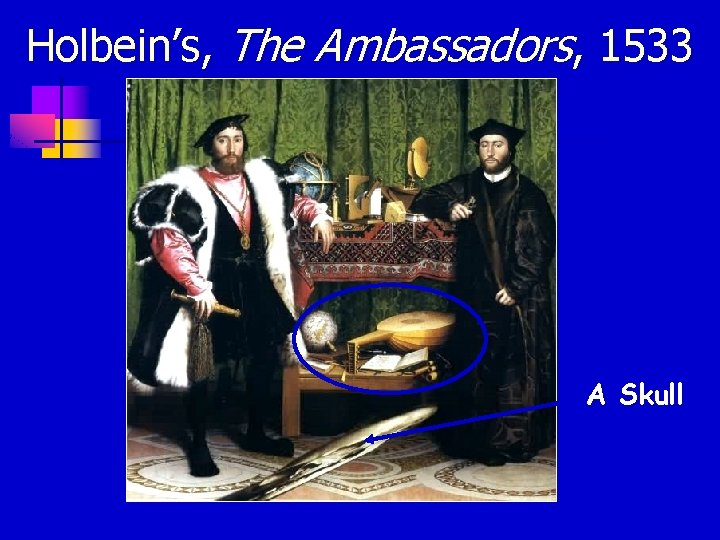
Holbein's, The Ambassadors, 1533 A Skull
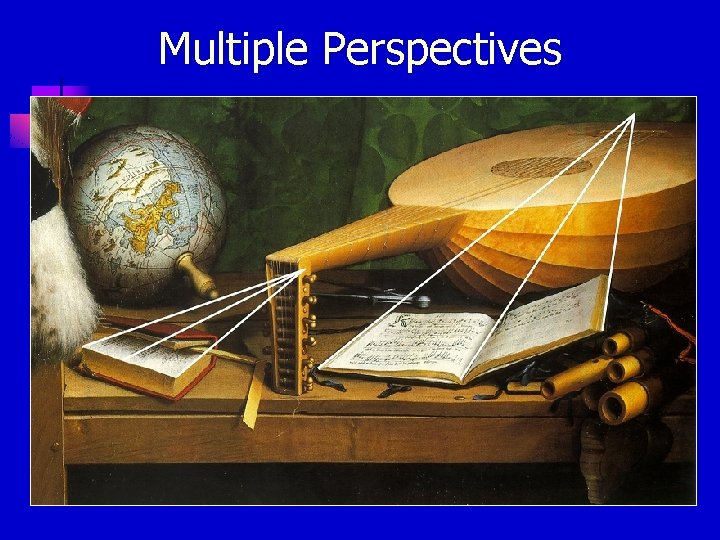
Multiple Perspectives
Flemish Painters north n Flanders-the creative center of northern Europe Jan van Eyck n north Used oil-based paints layers of paint created a variety of subtle colors in wear and jewels Pieter Bruegel the Elderberry northward n skillful in portraying large numbers of people everyday peasant life
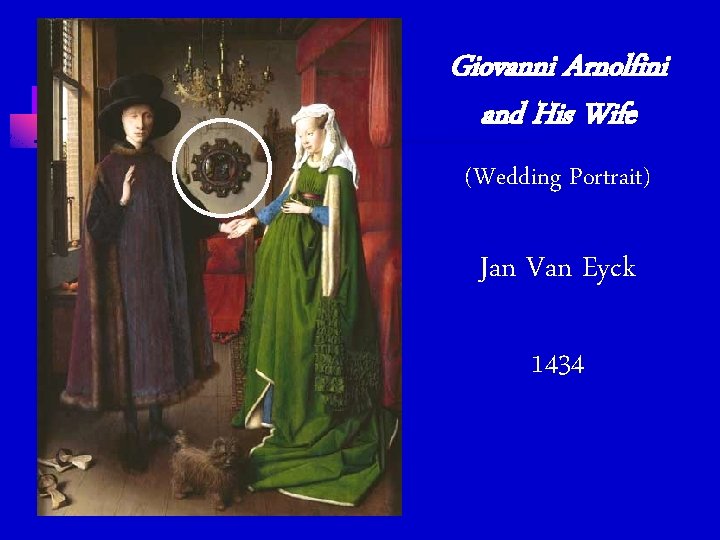
Giovanni Arnolfini and His Wife (Wedding ceremony Portrait) Jan Van Eyck 1434
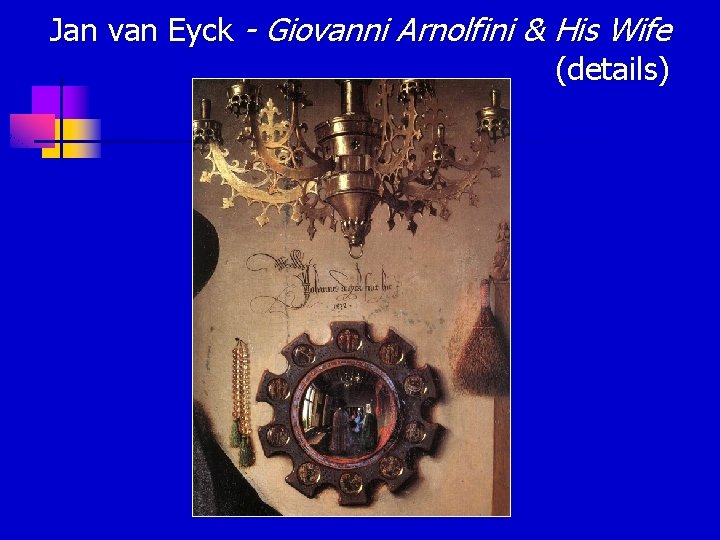
Jan van Eyck - Giovanni Arnolfini & His Wife (details)
Pieter Bruegel the Elder (1525 -1569) n n n One of the greatest creative geniuses of his age. Worked in Antwerp and then moved to Brussels. In affect with a circle of Erasmian humanists. Was securely concerned with man vice and follies. A master of landscapes; not a portraitist. n due north People in his works often take round, blank, heavy faces. They are expressionless, mindless, and sometimes malicious. They are types, rather than individuals. Their purpose is to convey a message.
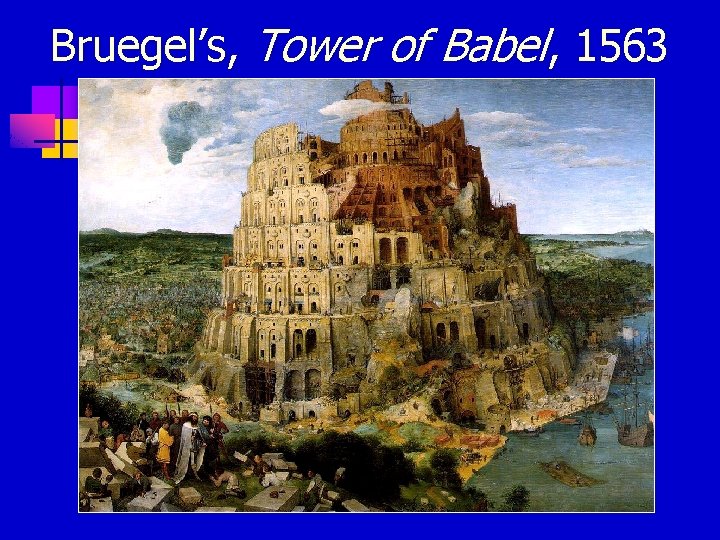
Bruegel'due south, Tower of Boom-boom, 1563
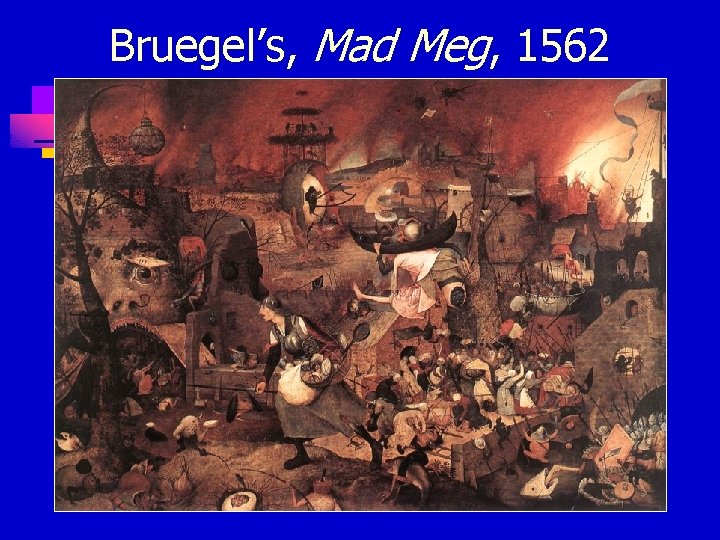
Bruegel's, Mad Meg, 1562
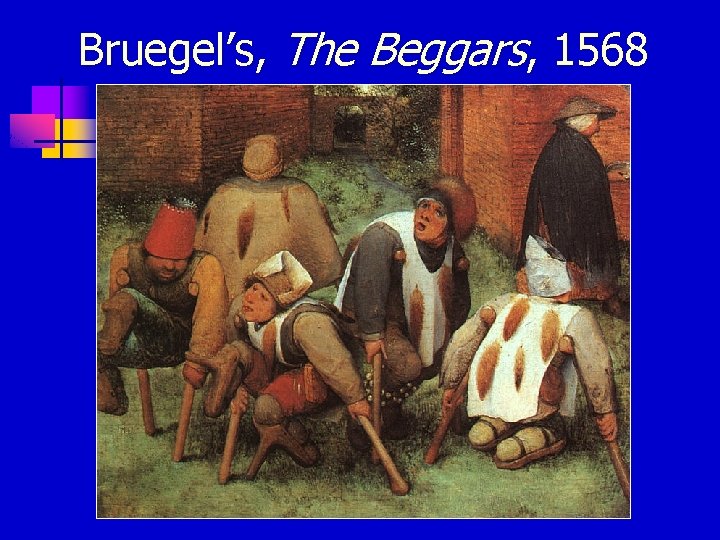
Bruegel'southward, The Beggars, 1568
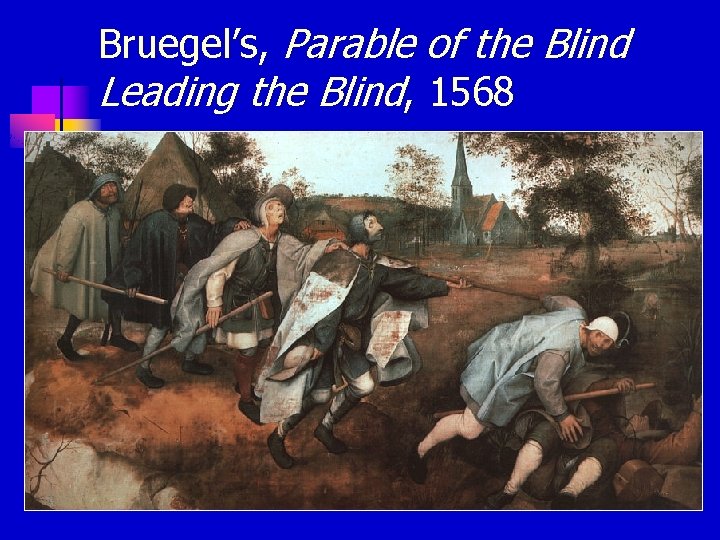
Bruegel's, Parable of the Bullheaded Leading the Blind, 1568
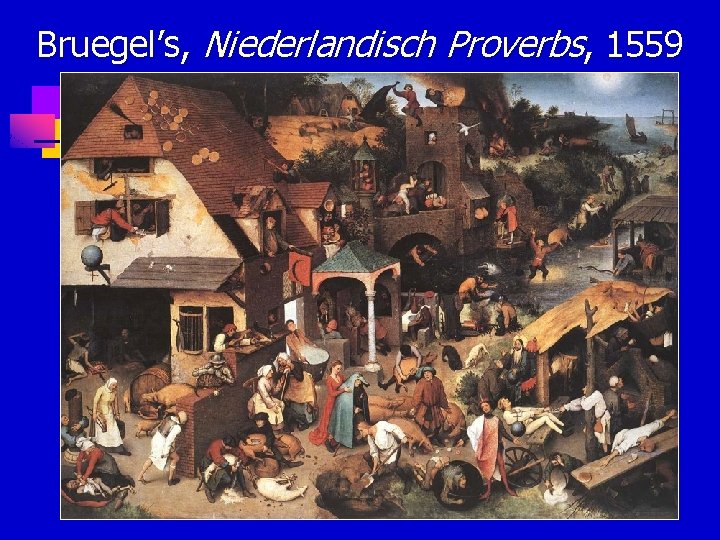
Bruegel'southward, Niederlandisch Proverbs, 1559
Northern Writers Try to Reform Society north n n Italian humanists were very interested in reviving classical languages and classical texts Northern humanists were disquisitional of the failure of the Church to inspire people to live a Christian life Christian humanism focused on the reform of society
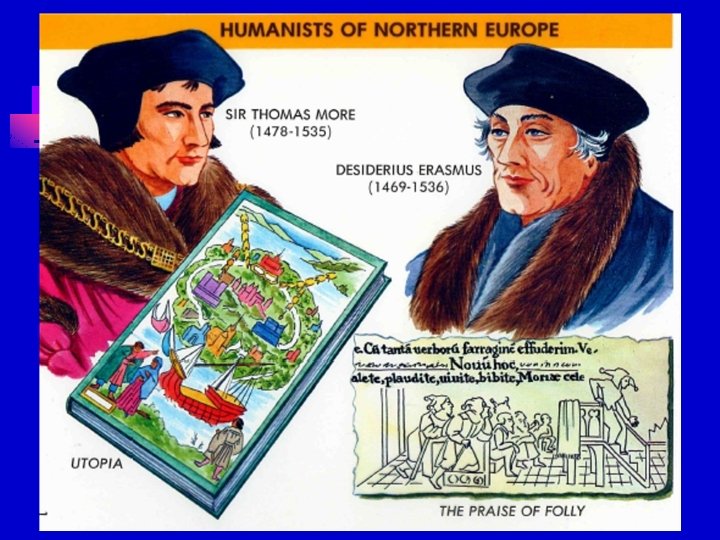
Christian Humanists n Desiderius Erasmus wrote The Praise of Folly north n in order to better club, all people should written report the Bible Thomas More wrote Utopia northward n an imaginary land where greed, corruption, and state of war have been weeded out More wrote in Latin, but later translated when pop
Women's Reforms northward northward formal schooling - usually sent only their sons Christine de Pizan due north n Commencement woman to earn a living equally a writer Wrote in French Men oftentimes made objections to educating women She questioned different treatment of boys and girls
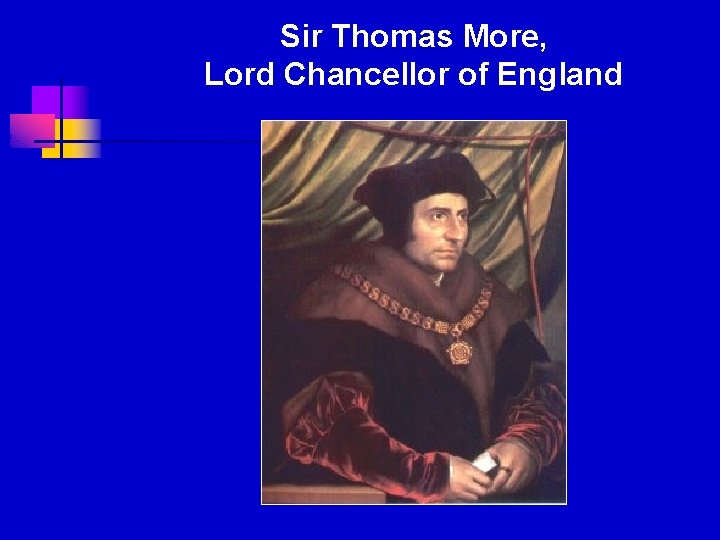
Sir Thomas More than, Lord Chancellor of England
The Elizabethan Historic period n due north Renaissance spread to England in the mid-1500 s known equally the Elizabethan Age, afterward Queen Elizabeth I Well-rounded educational activity She supported the development of English language art and literature
William Shakespeare due north n People regard him as the greatest playwright of all fourth dimension He revealed the souls of men and women through scenes of dramatic conflict n northward Tragedies: Macbeth, Hamlet, Othello, Romeo and Juliet, and King Lear Comedies: A Midsummer Dark's Dream and The Taming of the Shrew
Printing Spreads Renaissance Ideas n Effectually 1045, Bi Sheng of Cathay invented movable blazon n n most Chinese printers found movable type impractical due to large number of characters Gutenberg Improves the Printing Process thirteen th century - blockprinted items reached Europe from Mainland china. Too slow and laborious for need
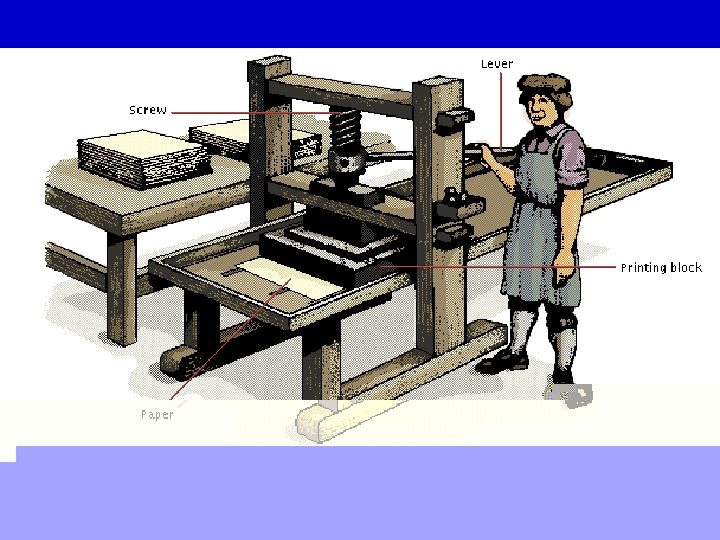
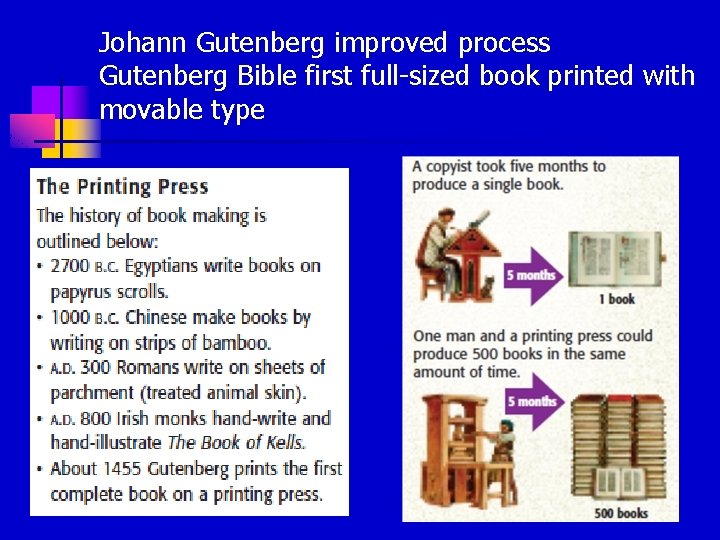
Johann Gutenberg improved process Gutenberg Bible first full-sized book printed with movable type
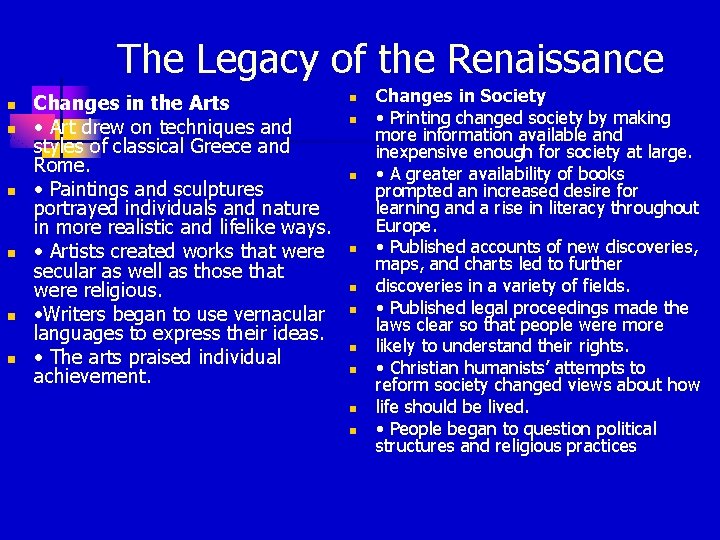
The Legacy of the Renaissance north northward due north Changes in the Arts • Art drew on techniques and styles of classical Hellenic republic and Rome. • Paintings and sculptures portrayed individuals and nature in more realistic and lifelike ways. • Artists created works that were secular as well as those that were religious. • Writers began to utilize vernacular languages to express their ideas. • The arts praised individual achievement. n due north northward n due north Changes in Gild • Press inverse society by making more than data available and inexpensive enough for gild at large. • A greater availability of books prompted an increased desire for learning and a rise in literacy throughout Europe. • Published accounts of new discoveries, maps, and charts led to further discoveries in a variety of fields. • Published legal proceedings fabricated the laws clear so that people were more probable to sympathize their rights. • Christian humanists' attempts to reform society inverse views nigh how life should be lived. • People began to question political structures and religious practices
Source: https://slidetodoc.com/chapter-17-section-2-the-northern-renaissance-renaissance/
0 Response to "Chapter 17 Section 2 the Nothern Rensiassnace Guided Reading Answer"
Postar um comentário